The Artwork is that paradoxical instance which -beyond judgments about its quality- establishes cavities of consciousness in the incessant flow of the information/ communication. Contrary to a
luxury, it is a essential breathing for any evolution: democratic, individual and collective.
Goy B 2004. Projet Cône Sud Catalogue. Fonds régional d’art contemporain, Île-de-France.
Bernard Goy’s contemporary definition of artwork and -in a way- of contemporary art, will be of great help to introduce Felipe Ridao’s artwork.
“Felipe is an Uruguayan artist, settled in Oslo, with formal studies in graphic design and an artistic self-taught background.It is really hard to determine if “informal” learning is a positive or negative asset for an artist. In the particular case of Felipe, the lack of an orthodox artistic education allowed him to naturally break the imposed (and self-imposed) boundaries of the Uruguayan contemporary art scene. His artwork, which started with the brink of the second millennium, is developed in diverse expressions including live performances and public events.
Even though Felipe has categorised his work into three groups, namely: “Brands (Series)”, “Images” and “Situations”, his artwork follows an internal logic that is not identified and/
or distinguished by shapes or images, but by the creation of situations or by exposing relations where opposed narrative elements are purposefully set against: those linked to media’s ideology and visual communication aesthetics, to those of ideological borders of cultural spaces, and/or to elements of the consumer and performing arts industries.
The opposition of these elements creates spaces of contradiction, or paradoxical instances as Goy indicates, and also reveals the state of the social alienation, such as the social and economical fragility we live in, as well as the limits that art and cultural field has to talk about these topics.
In some cases, the gestures and actions chosen by Felipe, are minimal or almost imperceptible.
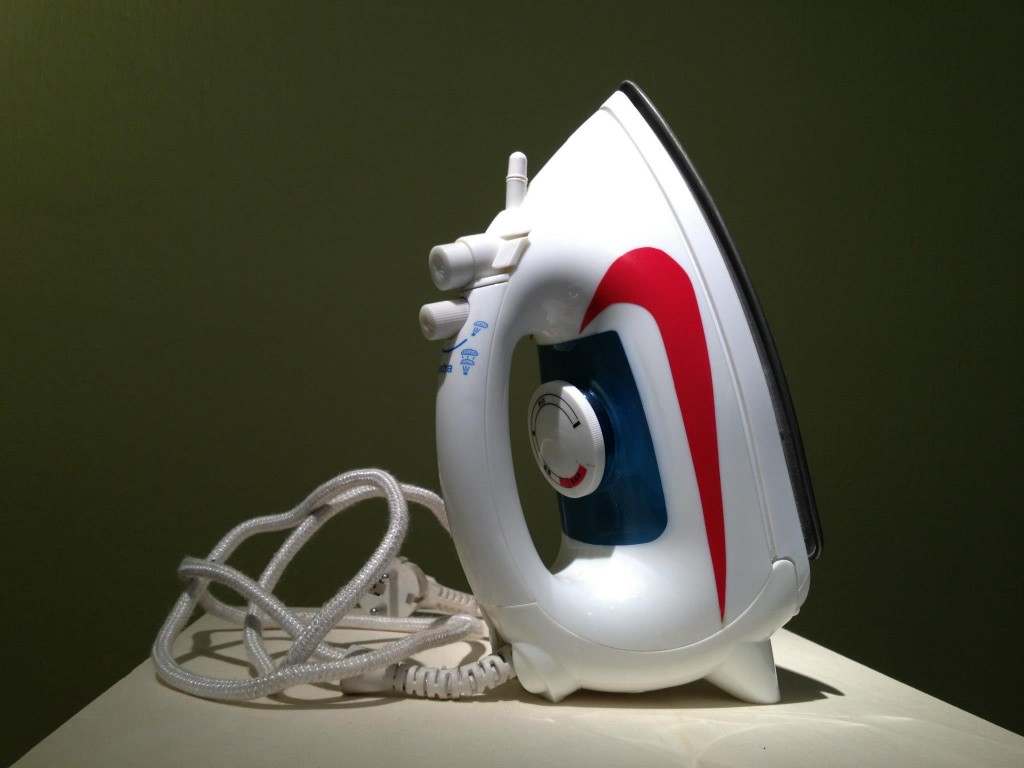
An example of this is the sculptural object “Plancha-Plancha” (Montevideo, 2008) The artist took the well known small appliance used to iron clothes and put on it the world-renowned Nike Swoosh. In a skim read, we can associate this gesture to an ironic comment that the artist makes about the non traditional expansion of products that many companies develop nowadays, taking advantage of the popularity of their corporate images. As we know, the contemporary human beings consume symbols rather than objects. In this case the renowned brand of athletic shoes and clothing would have expanded to the small appliances industry, but “Plancha” (Eng. “iron”) in Montevideo’s urban argot, designates a socio-cultural condition related to a sort of urban marginality. One that lately have developed own habits (as the fanaticism for the consumerism of sports brands with Nike at it’s peak) and cultural codes, highly visual as gregarious, linked in some sense with urban delinquency (“Plancha” in Uruguayan police jargon means the page of a criminal record where its attached the mug shot).
But Felipe’s work is not trying to protest the abuse of corporations or social problems of poverty and exclusion associated to this “Plancha” culture; it is simply showing the prejudices and the difficulties of the art field to face this phenomena without a negative judgement.
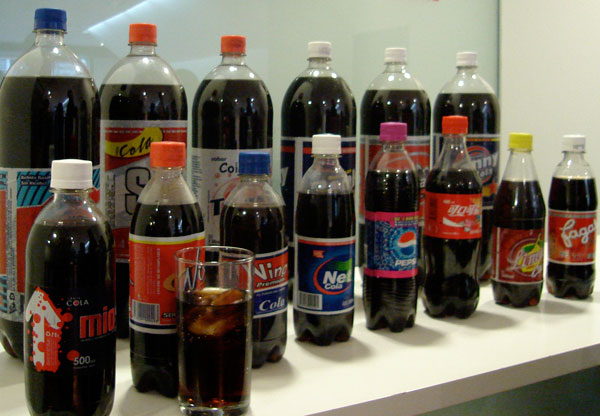
“Local-Cola” (Montevideo, 2008) is another sculptural artwork from Ridao, but in this case made form a collection of bottles of different Uruguayan brands of “Cola” flavoured soft drinks, that emulate the world renowned one. These products and their brands are manufactured in a marginal way when compared to the huge multinational. This artwork, that goes along the edge of ethnography, is filled with sardonic humour -another characteristic of Felipe’s oeuvre and
explores how a mass consumption product turns into the archetype of soft drinks. This leaks not only to its condition of sign but it imposes as a naturalised element of our culture.
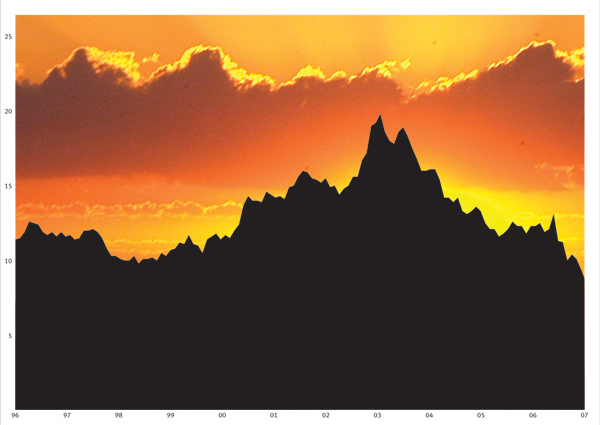
In the artwork “Montañas Gráficas” (2007) Felipe manipulates postcards, pictures which are massively reproduced, often used to advertise geographical places by the tourism industry.
His postcards show idyllic mountain landscapes, but with fictional topography, developed by unemployment rate graphs of some countries. The examples above mentioned, even if they embody criticism or comments, they also link directly to the symbolic spaces of contemporary art.
However, from his early days as an artist, he has generated a series of platforms where authorship loose its sense, to the extent that his work is based on the creation of situations more than representing artwork in a classical way.
The first example of this working frame was “LOGO”, an artistic collective studio where he worked for some years, developing activities on a wide range of subjects, attempting to reflect over features as well as over the ideology that frames the art field. When this studio dissolved, Ridao started the platform “USTED” from where he developed cultural events in a broad and diverse spectrum.
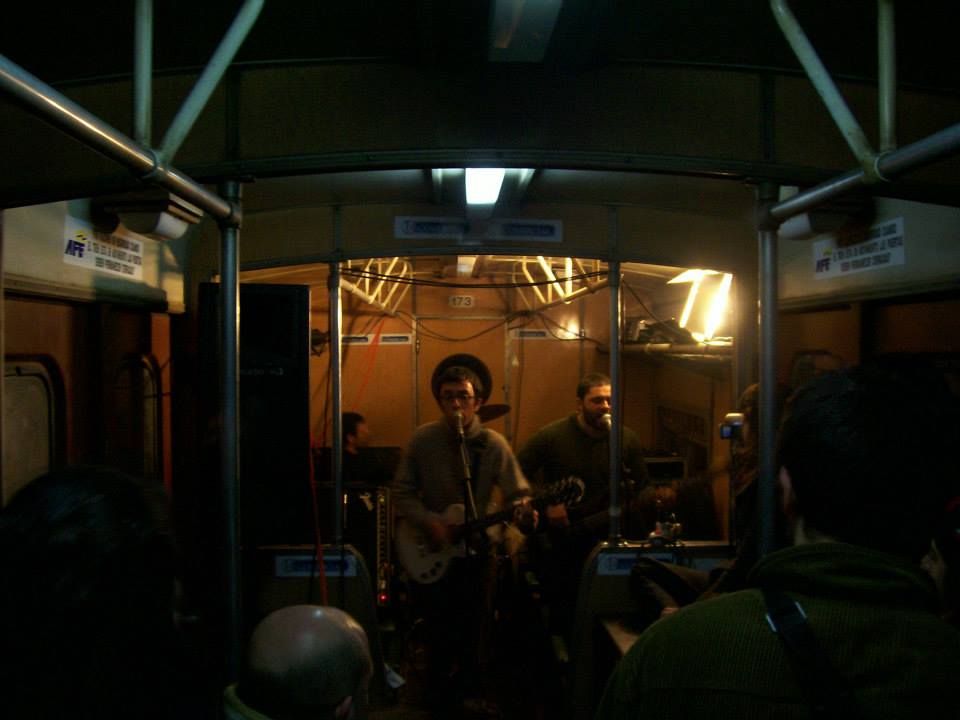
Two of them are recognised by their symbolic dimension as well as for the participation not just from the guests/audience but also from different professional performers, turning the participation of the artist almost to the anonymity. The first of these events was ENTREN, developed twice in 2006 and 2007. This event consisted in a series of cultural events performed in different wagons of a railway-train during its regular route.
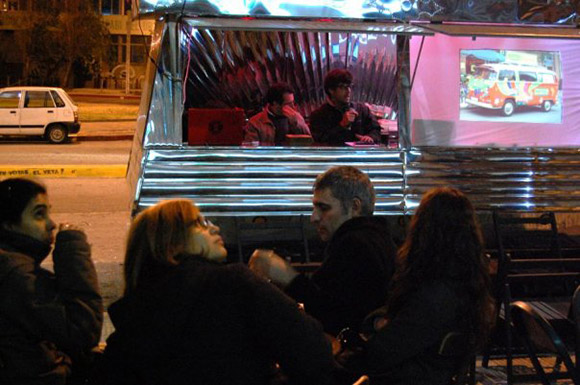
The second event, made in 2009, was more modest. It was called USTED MECANOGRAFÍA and was a collaborative event developed with other two artists using as a kind of stage or space, a local fast food truck, which in Uruguay are called “carritos”. The interest of this events, as said, is not only in the idea of generating platforms of social interaction, or in allowing the reproduction of a social scene, but also the rehabilitation of spaces in desuetude and besides extremely important as symbols of Uruguayan culture.
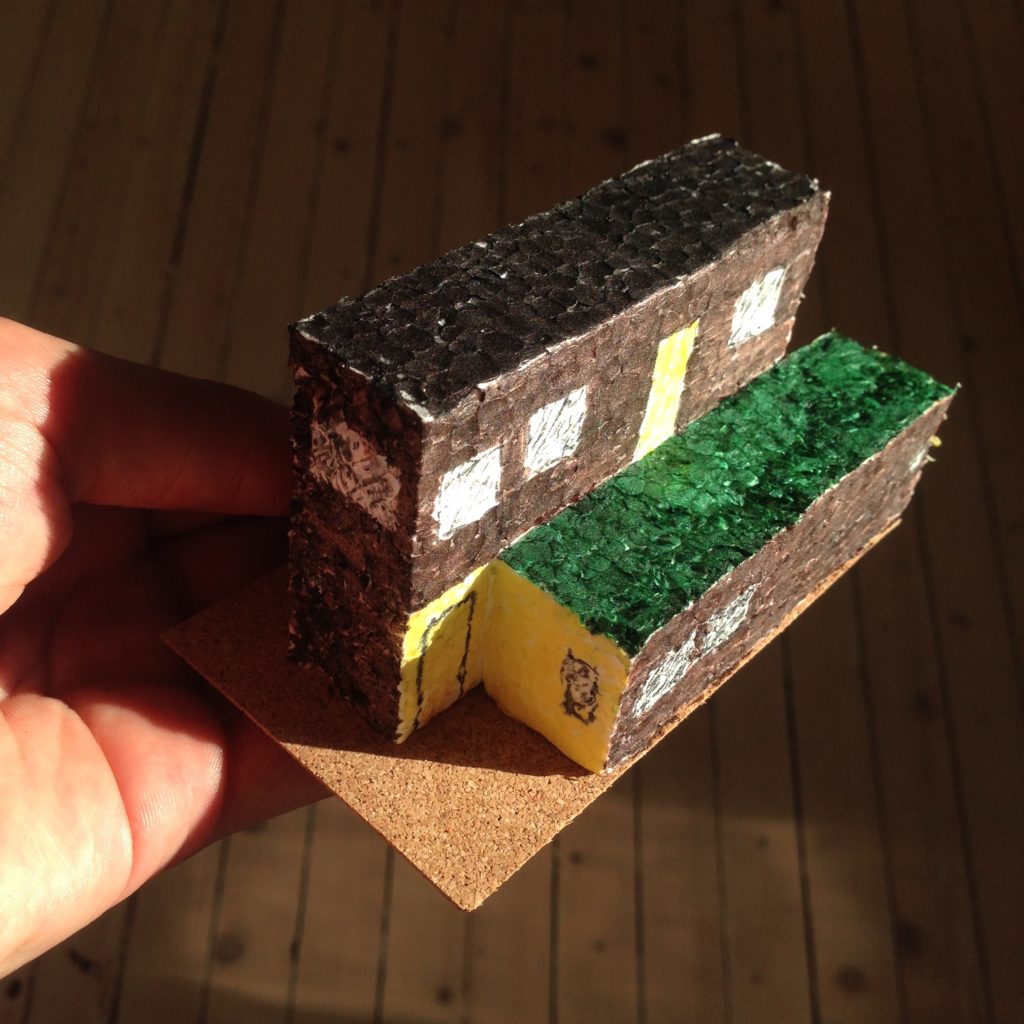
Felipe Ridao nowadays is living in Oslo, where he is building the concept of a new platform called “antipodes café” (Note: referring to DEG15), a place that will play with the idea of a typical space of social meetings, but quite more proactive. The aim of this “café” is not to sell coffee, it is a place for art activities but it’s not an art gallery, it is a place to work but it’s not a studio. In this project the artist is working with those three ideas as a starting point for developing his new platform of production and interaction. “antipodes café” will be also a place to focus on the processes of artwork as an ending point. For this reason, this platform can not be finished and will be always in progress.
If the social imaginary is outlined by the signs of comfort and show business, culture and fine arts seem to be doomed to stay together, or determined for the horizon of the Capital as much for a permanent social endogamy.
With his artwork Felipe Ridao subtlety points the restrictions of the doing -as a critical approach of the space of fine arts in culture creating new, temporary and alternative scenarios, allowing unknown ways of social relations as well as new perceptions of the visual arts.”
Manuel Neves, Brasilia 2013
Manuel Neves is an Uruguayan art curator and critic (AICA) specialised in LatinAmerican modern and contemporary art and formed in “Theory and praxis of language and of arts” at the School for Advanced Studies in the Social Sciences, France (EHESS).